Chicago sold its parking meters again, 46 to 3, and drivers pay until 2084
The council sold the curb a second time. The city got a check, a slice of whatever is left after the debt, and a promise to be asked next time. Abu Dhabi got out.
Chicago · 30 September 2026 · Corrected 2 October 2026
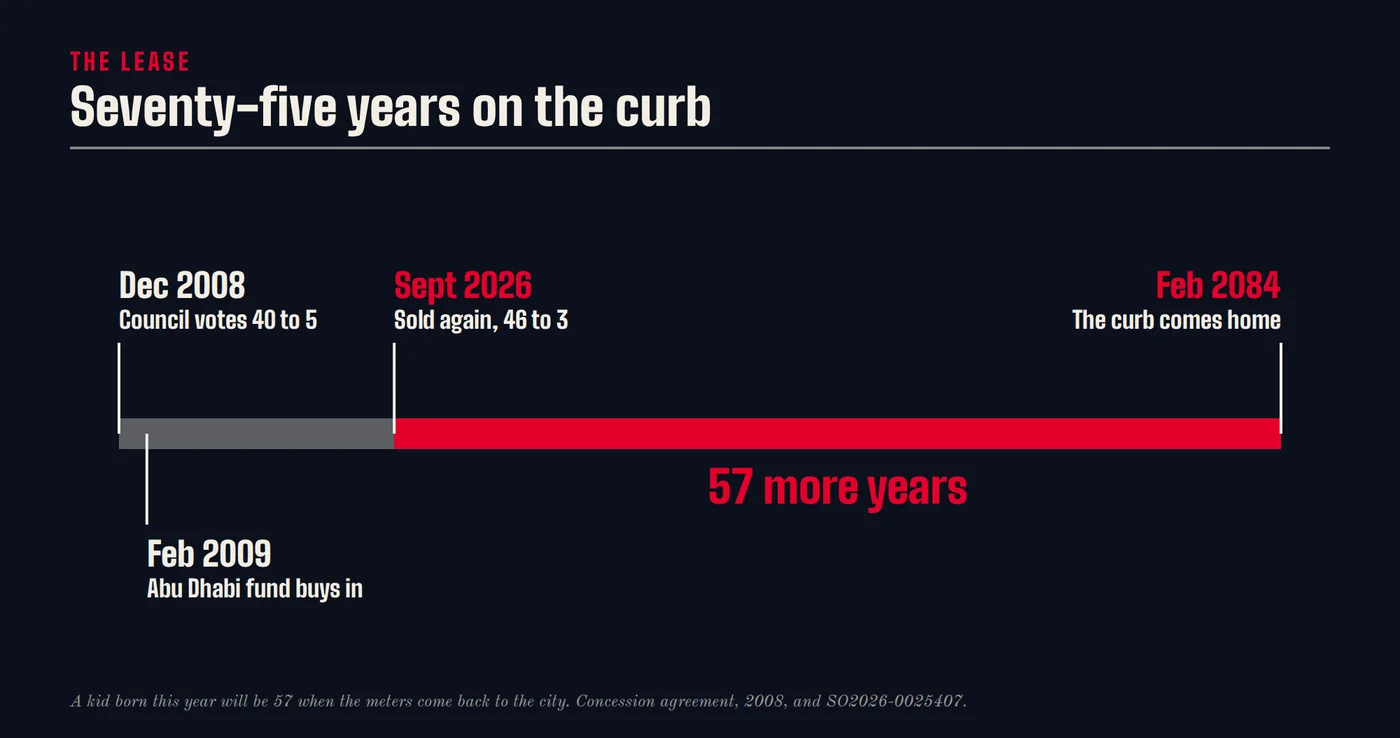
Tuesday afternoon the Chicago City Council voted 46 to 3 to let a New York investment firm called Stonepeak buy the company that owns our parking meters. The price the buyer named at a June hearing was $2.53 billion. That price is not in the ordinance they voted on.
Three aldermen said no. Jason Ervin of the 28th Ward. William Hall of the 6th. Byron Sigcho-Lopez of the 25th. Forty-six said yes. Ald. Angela Clay of the 46th was absent.
The check
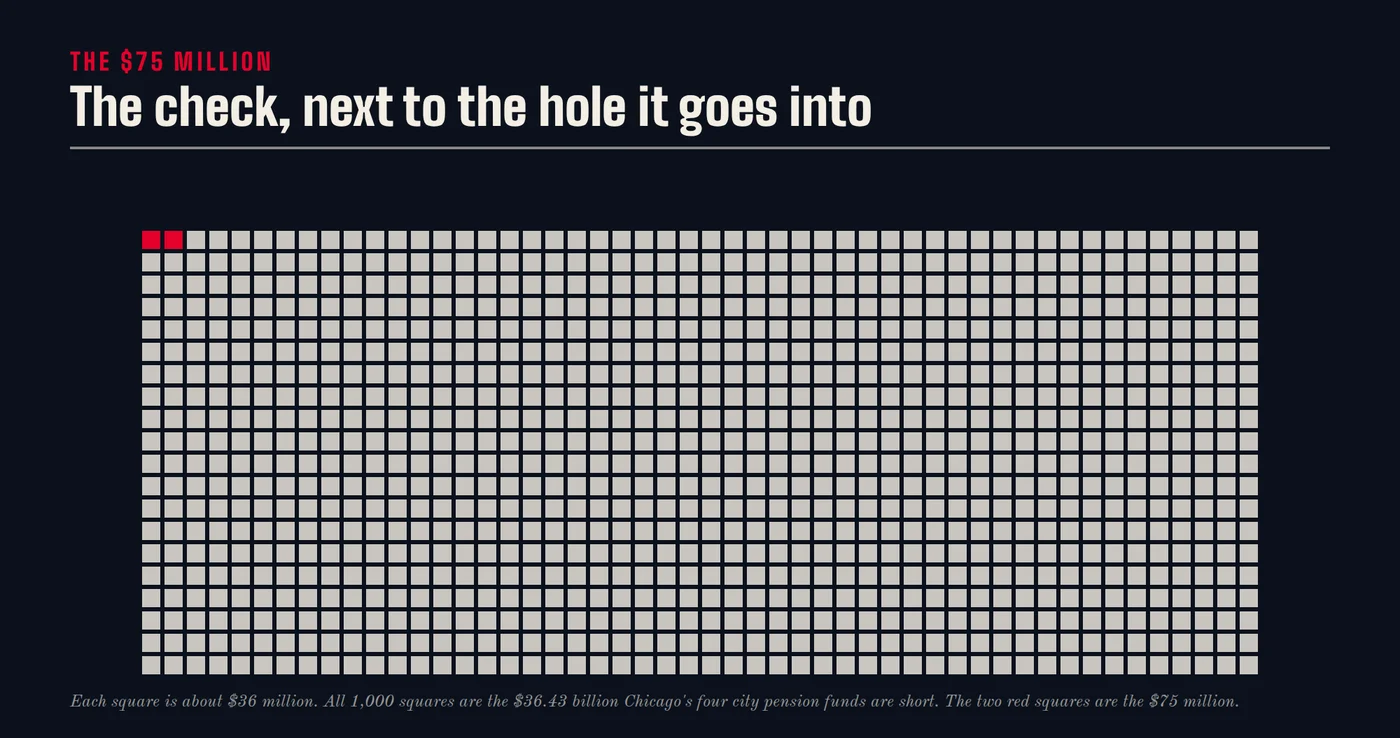
Stonepeak pays the city $75 million when the deal closes, which the parties expect by the end of the year. The money is earmarked for the pension funds. If the check does not show up, the approval goes away. That part has teeth.
Chicago’s four city pension funds hold about 28 cents for every dollar they owe. They are $36 billion short. The $75 million covers about two tenths of one percent of that. It is a nice check. It is not a rescue.
The 5 percent
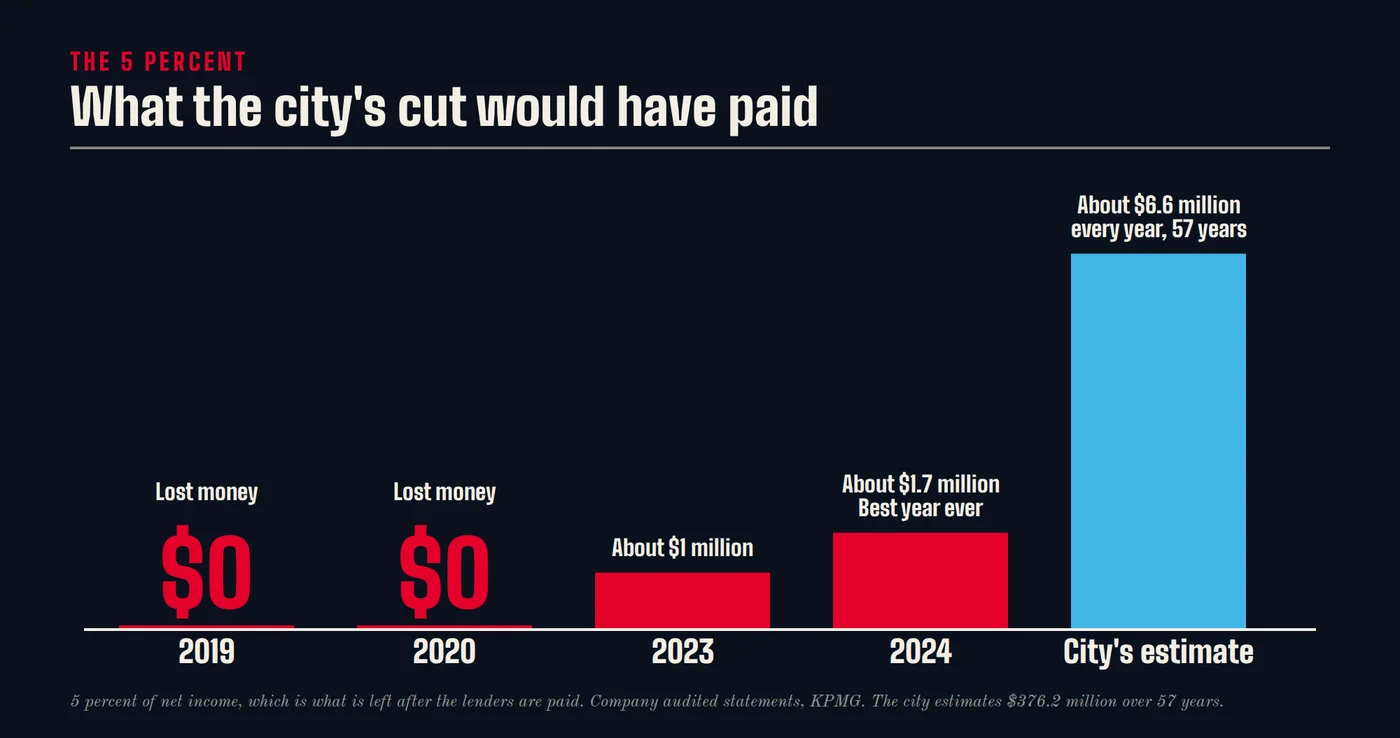
From now on the city gets 5 percent of the meter company’s net income. Net income is what is left after the company pays its bills, and its lenders get paid first. This company has always had lenders first in line.
We ran 5 percent against the company’s own audited books. In 2024, the best year in the audits we have, it comes to about $1.7 million. In 2023, about $1 million. In 2019 and 2020 it comes to nothing, because the company lost money both years.
The city’s own estimate says the 5 percent will pay $376.2 million over 57 years. That is about $6.6 million a year, or roughly four times what the best year on record would have paid. We found no limit on how much new money the company can borrow. Every dollar it borrows puts interest ahead of the city.
The debt decides what the 5 percent is worth.
The 2 percent
If the meters are sold again, the city gets 2 percent of the sale price. Read the fine print and the door has a few holes in it. The fee only applies to sales the city has to approve. Moving the meters from one Stonepeak fund to another does not need approval. Selling off pieces while Stonepeak keeps more than half does not need approval either.
Who cashed out
The sellers are the same crowd that has held the curb since 2009. Half belonged to @MorganStanley’s infrastructure funds. The other half belonged to a company called Deeside, owned by the German insurer Allianz and the Abu Dhabi Investment Authority. Abu Dhabi’s government fund bought in about two months after the 2008 vote, when nobody in Chicago was told who owned the curbs. The sworn filings for this sale put its stake at 24.9 percent. Seventeen years later it walks away with its share of the $2.53 billion, and the curb stays behind.
Borrowed $1.2 billion.
Paid the owners $353 million.
The meter company’s own audits, 2019.
Somebody sold a Chicago curb to a government fund on the other side of the world, and the fund did what funds do. It collected. Now it is cashing in.
What drivers get
The same meters. The same rates, which the city still sets. The same contract, which runs until February 2084. A kid born this year will be 57 before the curb comes home. Most of the aldermen who voted Tuesday will not be around to see it.
Before the vote, Dan Webb, the former U.S. attorney the sellers hired, warned the mayor in a letter that turning the deal down could mean “financial catastrophe.” The meters would have kept running either way. The contract would have stayed in force either way. The sellers were the ones sitting on about $1.08 billion of meter company debt and a fund that turns 18 this year. Financial catastrophe is real. The paperwork says whose.
“Financial catastrophe.”
Dan Webb, the sellers’ lawyer, in a June 2026 letter to the mayor
The council made the deal a little better than it was in June. It is also the second time in 18 years this city sold something it could never get back, in a hurry, with a deadline set by the other side of the table.
Three questions have answers on paper the public has not seen. Does the $2.53 billion include the $1.08 billion of debt? What did the city assume to get to $376.2 million? Dan Webb wrote “financial catastrophe.” We have not read the letter. Neither have you. Whose catastrophe was it, the city’s or the sellers’? Your alderman voted Tuesday. Anybody can ask. The answer, or the silence, goes in the next edition.
Forty-six to three. Put a quarter in and think about it.
Who got paid
- Morgan Stanley infrastructure funds. Their share of $2.53 billion, after 17 years of payouts
- Allianz and the Abu Dhabi Investment Authority. Their share of the same
- Stonepeak and its investors. The curb through February 2084
- Bankers, lawyers and advisers. More than $17 million in fees, by one alderman’s count
Who pays
- Drivers. Every quarter, every hour, until 2084
- Chicago taxpayers. Payments to the owner whenever the city closes meters
- Chicago’s pension funds. Last in line for the 5 percent, behind the lenders
Corrected 2 October 2026. An earlier version of this story quoted Dan Webb’s letter as saying “financial catastrophe for the city.” The only words on the public record are “financial catastrophe.” The earlier version also left him unnamed. All corrections.
Sources
The record
- Chicago City Council, SO2026-0025407, as passed 29 September 2026.
- The 2008 Concession Agreement and its amendments.
- Chicago Parking Meters LLC audited statements, 2012 through 2024, KPMG.
- Economic Disclosure Statements filed with the ordinance.
- Chicago Sun-Times, 22 September 2026, on Dan Webb’s June letter to the mayor.
- City of Chicago 2027 budget forecast.
- Reporting by WTTW, WBEZ, the Chicago Sun-Times, Block Club Chicago and WGN, 29 September 2026.
- Open: the purchase agreement between the sellers and Stonepeak, whether the $2.53 billion includes the meter company’s debt, and Dan Webb’s June 2026 letter to the mayor.
Read next
Aldermen spent their meter votes on a sealed promiseThe deportation airline, the sealed certification and the buyer with no name.
Chicago’s pension funds hold 28 cents for every dollar they oweThe hole the $75 million is going into.