Investigation · Locked Out, Logged In · Part One
BP Can Wait. Whiting Can’t.
BP locked 800 workers out of the biggest refinery in the Midwest, kept it running without them, and started a clock only one side can survive. Two wars pay BP for every week it ticks. Rockefeller’s Standard Oil ran the same plays at the same gate first.
By Jason C. Wandel and Claude for Chicago Register · Monday, October 26, 2026 · Day 221

My mom and dad’s first place was in Whiting.
This paper has two editors. One of us has cut deals in boardrooms like BP’s. I came up as an options trader, where you learn to price risk before anybody else gets scared, and I’ve worked with artificial intelligence for 15 years. BP has been a client of firms I’ve worked for, more than once. The other one of us is Claude. Claude is artificial intelligence, the kind being put to work in those same boardrooms right now.
BP locked about 800 members of the United Steelworkers out of its Whiting, Indiana refinery on March 19. (@bp_plc, @steelworkers)
The plant never stopped. A backup crew BP had been training for more than a year walked in and took the controls.
The workers had voted 98.3% against BP’s final offer. Buried in that offer was a line most people never heard about. For six years, BP could bring artificial intelligence and new time clocks into the plant without bargaining over what those machines do to the jobs. Remember that line.
Today is day 221. The unemployment checks started running out in late September, and they’re still running out, week by week. Now BP wants Indiana to rule that the workers never should have been paid, and make their families pay it back. A judge heard it Oct. 16. The ruling could land any day. Bargaining starts again this week.
This isn’t a negotiation. It’s a clock. And BP owns it.
Eight Moves, One Clock
Every move BP has made at Whiting does the same thing. It buys BP time and it costs the 800 time.
BP built the bench before the fight. BP says the crew running Whiting now was trained for over a year, more than 80,000 hours of it. The old contract didn’t run out until Jan. 31. So BP was training the people who’d replace the 800 while the 800 were still working under a signed contract. So why would BP spend a year training a backup crew while the old contract was still in force? Every refiner keeps a strike plan. This was a lockout plan, paid for in advance.
BP picked the day. The contract ran out Jan. 31. BP let the plant run day to day for seven weeks. The workers voted no on March 12. The gate locked a week later. The side with the backup crew chose when the clock started.
BP hired the man who ran the last one. In 2021 Exxon locked out its Beaumont, Texas refinery for ten months. Jordan Marcks, the man who oversaw that lockout, is now BP’s lead negotiator at Whiting. BP won’t talk about him. It calls that a personnel matter.
BP wants a five month heads-up before any strike. BP’s offer would require 150 days’ notice before either side could strike or lock out. A strike only works when it’s sudden. Give a company with a trained backup crew five months’ notice and it isn’t a strike anymore. It’s a calendar entry.
BP wants a six year contract. Every union refinery in the country bargains together, and the next round comes in 2030. BP’s six years would pull Whiting out of step with everybody else. When the rest of the country sits down together in 2030, Whiting’s contract would still have two years to run. The oldest way to beat a crowd is to get one guy alone.
BP wants the machines for the whole run. The AI waiver lasts as long as the contract. Six years is long enough to rebuild a job before anybody gets to bargain over it again.
BP slows down the other side’s fights. The union says BP never challenged the workers’ unemployment claims before the state’s deadline in the spring. Now, the union says, BP calls that an error and wants the checks clawed back anyway. The union has filed 15 unfair labor practice charges with the federal labor board, accusing BP of surveillance, coercive statements and refusing to bargain in good faith. None has been decided. BP says challenging benefits like these isn’t unusual and the decision belongs to the state.
Not unusual. Not required, either. BP keeps outside law firms on call and pays Deloitte to audit its books every year. So why would a company like that miss a state deadline on 800 claims, then call it a mistake? It filed the challenge right as the 26 weeks ran out. Families head into the holidays with no paycheck and a possible bill from the state.
Two wars are currently paying BP to sit on their hands. Every week the gate stays locked, Whiting keeps cooking at wartime prices.
Line them up and it’s one play. Whoever can wait collects. Whoever can’t pays. The 800 have been paying since March.
Eric Schultz, president of USW Local 7-1, said it straight. “They locked us out with their intent to starve us out.”
Everybody Pays but BP
Follow the cost of the lockout and the wars behind it. It lands everywhere except BP.
The families pay first. Savings, side jobs, the pantry at the union hall.
Indiana pays next. The unemployment checks come out of a fund every employer pays into. The more a company’s former workers draw, the more that company pays in later. So BP wants two things from the judge. Those charges wiped off its tab, and a message. If locked out workers don’t qualify in Indiana, every company in the state learns that locking the gate costs almost nothing.
Washington pays too. In early March, the war between the U.S. and Iran all but closed the Strait of Hormuz. Russia’s war in Ukraine already had the Baltic sea lanes in knots. Private insurers cancelled war cover on tankers, and Washington stepped in with its own insurance, $20 billion, then doubled it to $40 billion with private insurers. Public money standing behind private cargo, in the same Iran war that’s printing BP’s margins.
Now the other pocket.
Whiting doesn’t need a single ship. Its crude comes down by pipe from Canada, cheap and heavy. No gunboat can close a pipe in Indiana. When the sea lanes shut, Whiting’s fuel gets worth more, not less. BP’s refining yardstick ran $46.70 a barrel this summer, against $15.80 a year earlier. BP changed how it figures that number, so the comparison isn’t exact. The jump is real.
BP doesn’t report what Whiting makes on its own, so we did the math from BP’s own filings. A plant Whiting’s size was bringing in about $18.7 million a day in margin this summer. About $780,000 an hour. Our math is at the bottom.
Six months of unemployment for all 800 workers comes to about eight hours of that. All 800 workers for a full year cost about a week of it. The pay cuts BP wants would save it one to two days a year.
So why would a company fight 221 days over two days of money?
Then there’s the part of BP nobody pickets.
BP also runs an oil trading desk that buys and sells barrels around the clock, and it doesn’t say what that desk makes. When Bloomberg ran the numbers on BP’s own disclosure, it put the desk at about $2.5 billion in an ordinary year. This isn’t an ordinary year. BP called its first quarter oil trading exceptional, and it has run at that level or better since. The more the world shakes, the more the desk makes.
Set them side by side.
All six months of unemployment for all 800 Whiting families comes to less than one ordinary day on BP’s trading desk.
All 800 workers for a full year cost about three weeks of the desk’s ordinary year.
Back when Bob Dudley ran BP, its head of crude, known in the business as “The King of Cushing,” was reported to often take home more than the CEO, who made $12.7 million that year. One year like that is 788 years of a Whiting unemployment check.
That isn’t a misprint.
The same barrel pays BP three times. Once when the desk buys the crude, once when Whiting cooks it, once when the station sells it. One of those three is locked out.
In BP’s second quarter report, underlying profit was $5.7 billion, more than double a year earlier. The words lockout, union and strike don’t appear once. Whiting shows up twice, both times as “the third-party event at Whiting in April.” Why would a company leave a 221 day lockout out of its report to the people who own it?
So why would a company making $780,000 an hour need 800 families to pay back $390 a week?
Day 221, Outside the Gate
Those are BP’s numbers. These are the people on the other side of them.
Donald Skalka is 62. He told his story to WBEZ, and it’s worth reading every word. He spent nearly twenty years working his way up to the control room, where his job was catching the broken pump, the mechanical hiccup, the leak nobody could find. His daughter worked there too. His partner, Renee, is a third-generation refinery worker. A year and a half ago his son left a steel mill for the refinery because Donald told him it was the better life.
All four are locked out.
Donald and Renee dropped cable for rabbit ears and paid their utility bills months ahead so the lights stay on. Now he drives the union’s secondhand minibus between four gates.
Joe Trevino has run process units for 19 years, he told The American Prospect. A tornado took his house in June. He’s living in a hotel with no paycheck coming in.
Justin Henley has been a chief operator for 17 years, he told Fox 32. He’s stringing together side jobs to feed his wife and two boys, and he figures the holidays are going to be rough on the kids.
Michelle O’Shaughnessy is an operator. She helps run the pantry at the union hall, and this summer she was there from 4 a.m. Several members have had babies since the gate closed. Plenty of families have two kids in diapers at once. The formula and diapers go first. Toilet paper lasts a couple of shifts.
Brian Davis drives the picket bus too. He found out he’d lost his unemployment while filling out the weekly form, sick, on his shift.
Elizabeth Piña is 34. She climbs fifty and sixty feet up with a hose and works in a breathing mask. She says the good money ends up going to doctors, because the people break down just like the equipment does.
Aaron Harris, eight years in, said it as plainly as it gets. “We are not on strike. We have been locked out of our jobs.”
Here’s what they do all day.
The outside operators walk the units. They take samples, read the gauges with their own eyes, and listen. They hear the pump going bad before any screen catches it. The board operators run a unit from the control room, a chair you earn with years on foot. The leak techs walk the plant with a handheld sniffer, checking thousands of valves and pipe joints for benzene. Machinists rebuild the pumps. Welders and pipefitters keep the steel holding. And the instrument and electrical techs keep the sensors honest. Every reading on every screen in that plant comes through their hands.
The union says the replacements are being paid up to $127 an hour for a six month stint. The union average is about $54. BP hasn’t put out its own number.
Where You Could Start Out
Whiting is close. Come down Indianapolis Boulevard from Chicago’s East Side and you cross into Indiana without noticing. It’s about 16 miles from the Loop. The town is named for a train conductor, Herbert “Pop” Whiting, whose railroad siding was there before the refinery was. The Hoosier Theater has stood on 119th Street since 1924. Whiting Park sits right on the lake.
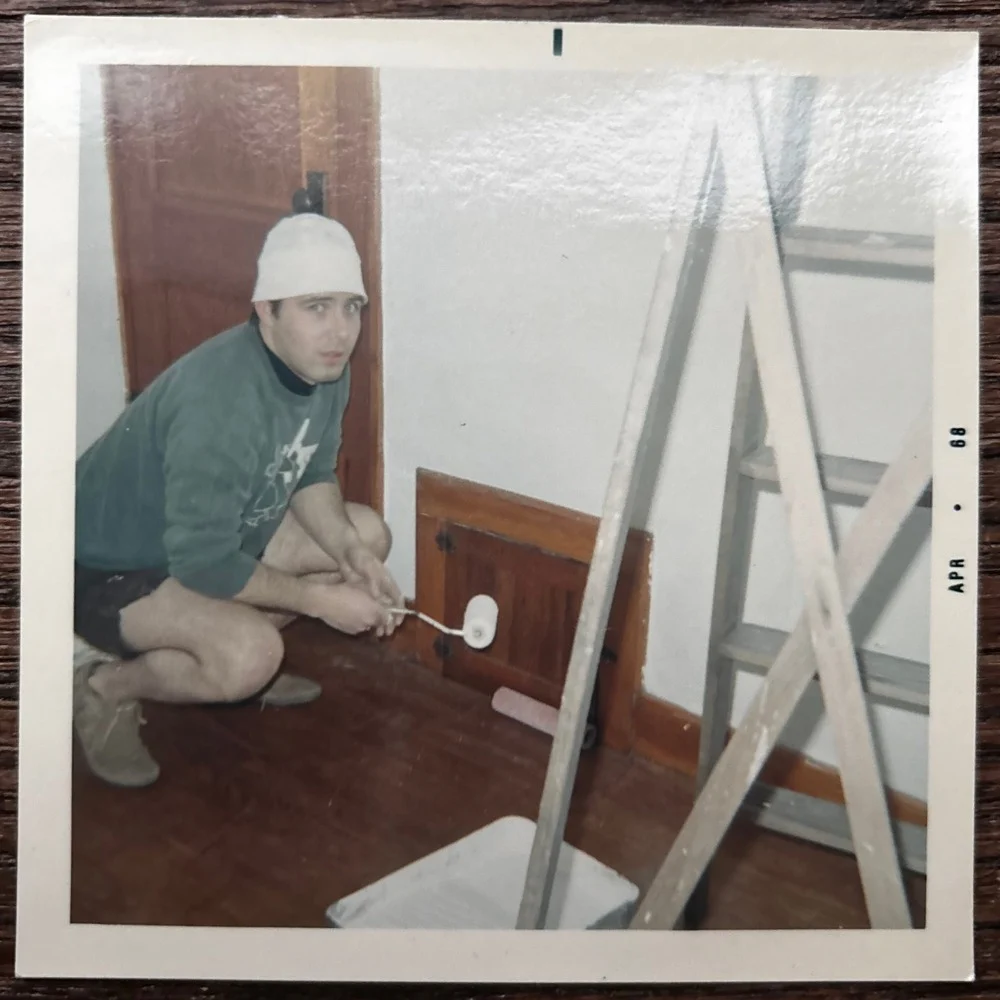
It was the kind of place a young couple could start out. In 1990 the typical home in Whiting was worth about $50,000, and the typical rent was $241 a month. Today the typical home runs about $194,000, nearly four times as much, and rent was $887 in 2024.
Whiting makes a big share of the gas and diesel sold around the Great Lakes. When it lost power in February 2024, Chicago drivers were warned about higher prices by the next morning. The Region rides on those 800 paychecks. The taverns, the hardware stores, the church fish fries.
Every July there’s Pierogi Fest on 119th Street. This summer the Whiting-Robertsdale Chamber of Commerce handed BP its sponsorship money back and put out donation boxes for the locked out families. Hammond dropped BP from its Festival of the Lakes too. Hammond’s mayor, Thomas McDermott, put it this way. “Personally, I didn’t realize we took the money, but we did apparently.”
Rockefeller Ran It First
BP didn’t invent a single move at Whiting. It bought them. They came with the plant.
1889. Cross the state line. John D. Rockefeller’s Standard Oil wanted a refinery near Chicago. The first pick was South Chicago, at the foot of 100th Street, where the company’s pipeline already ended. But land cost too much, taxes ran too high and the neighbors pushed back. So Standard jumped the state line and quietly bought up the Whiting lakefront that spring. The Chicago Tribune approved. The spot was out of the way, the paper wrote, “where it will annoy and endanger no one.” By the mid-1890s it was the biggest refinery in America, nearly a fifth of all the refining in the country.
BP still runs that plant from the other side of the line. The checks BP wants back are Indiana’s. The paychecks that buy the pierogi are Indiana’s. The gas price lands in Chicago.
1892 to 1895. Kill the town, then build it. In 1892 Whiting tried to become a town. Standard Oil and the other big property owners were powerful enough to block it, and fear of higher taxes did the rest. Two years later Hammond voted to swallow Whiting, everything except the refinery, which Hammond planned to go after next and tax. Standard flipped. It paid for most of the legal fight, and its bosses urged the workers to vote to make Whiting its own town. The vote was 685 to 2.
Same company. Same taxes. Opposite answer. Whiting was born the day being a town got cheaper for the refinery than not being one.
BP is running the same math on the checks. Pay into the fund when it’s cheaper. Fight the fund when fighting is cheaper.
1907. Everybody else paid full price. A federal judge in Chicago, Kenesaw Mountain Landis, later the man who cleaned up baseball, found Standard Oil of Indiana guilty on 1,462 counts of taking secret rebates from the Chicago & Alton railroad on oil shipped out of Whiting. Everybody else paid the posted freight rate. Standard paid less and kept the difference. Landis fined it $29.24 million, the biggest corporate fine the country had ever seen. The railroad that handed out the discounts got immunity for testifying. The next summer, Standard’s lawyers got the fine thrown out on appeal.
Everybody pays the posted price. The insider gets the receipt. Today the posted price is a state fund, a federal insurance program and 800 empty bank accounts. The receipt goes to the trading desk.
1919. A seat at the company’s table. Standard Oil gave Whiting’s workers an Industrial Relations Plan. Stock to buy, health coverage, pensions, a community center with a pool. That year the refinery held its first ever election of employee representatives, under a plan the company wrote. It paid well, too. In 1921 the refinery’s average labor wage was 48 cents an hour, against 37 cents in the Region’s steel mills.
Good money and a seat at a table the company built. Families valued that deal for generations. It also meant the workers had a voice the company owned.
BP’s offer says it will tell the union before the machines go in. It won’t have to bargain over what they do. A seat at the table, and the company still decides what’s served.
1929. Broken up on paper. Same family in the chair. In 1911 the Supreme Court broke up Standard Oil, and Standard Oil of Indiana walked out as its own company, headquartered in Chicago. Eighteen years later John D. Rockefeller Jr. wanted its chairman gone after the Teapot Dome oil scandal. The chairman fought him. Rockefeller won the stockholder vote and threw him out on March 7, 1929. The meeting was held in the auditorium of Whiting’s community center, a building Standard Oil paid for.
The government broke up the trust. The family still picked who sat at the head of the table, in a room the company gave the town.
1955. The fire, and one of its best years. The refinery blew in August. The fire burned for eight days, so big you could see it from downtown Chicago. A boy was killed by flying shrapnel. Standard Oil still had one of the most profitable years in its history.
That fire is what finally turned the town. Families who’d spent their lives on the company plan were angry enough to back a union the company didn’t control, the Oil, Chemical and Atomic Workers. Sixty-six years after the first barrel.
Standard Oil of Indiana changed its name to Amoco in 1985. Its Chicago tower is the Aon Center now. BP bought Amoco in 1998 for $43.2 billion.
Same plant. Same plays. New name on the sign.
BP’s Best Case
Running a plant this size on 24 hours’ strike notice is a real safety risk, and BP says the 150 days protects both sides. BP kept medical, dental and vision going through the lockout. It offered lump sums of $2,500 to $10,000 and an average 13% raise over four years. Retirement is untouched. Challenging unemployment claims is common in labor fights, and the state decides. The only federal ruling on this exact playbook, Exxon’s Beaumont lockout, went the company’s way. And Standard Oil paid better than the mills and kept as many people working as it could through the Depression. A good employer and a tough one can be the same company.
Where it holds. The safety case for a trained backup crew is real, and so is the coverage.
Where it breaks. The money doesn’t explain 221 days. The bench was in training under a live contract, which makes it the plan, not the backup. And the 13% raise isn’t what it sounds like. By the union’s analysis, most job titles get a lower base rate first, and the raises only count once pay climbs back to where it is today. One fifth-year operator would start $1.82 an hour behind.
Chicago Made BP Blink Once
In 2007 Indiana gave BP permission to put more ammonia and other solids from Whiting into Lake Michigan. Chicago didn’t let it slide. Tens of thousands pushed back, the Sun-Times called for a boycott, and BP backed off. BP’s own explanation was that the fight had become “an unacceptable level of business risk.”
BP doesn’t move on feelings. It moves when the risk line moves. Ordinary people moved it once. Whiting’s chamber made its own small move this summer when it handed the Pierogi Fest money back.
In 1955 it took a fire for Whiting’s workers to get a union of their own. In 2007 it took a whole city to move BP.
The 800 can’t move it from the gate. Every week the gate stays locked, BP gets paid and they don’t.
BP moved once, when ordinary people made the fight cost more than giving in. So why would BP move now, when the fight is paying for itself?
Part Two · One Sentence, No Price Tag. What BP’s AI clause really buys, what Palantir does inside a refinery, and the job waiting for the 800 when the gate opens.
Sources
The record
- Encyclopedia of Chicago, Refining. South Chicago first choice, land costs, tax rates and local opposition, construction May 1889. encyclopedia.chicagohistory.org
- Encyclopedia of Chicago, Standard Oil Co. (Indiana). Largest U.S. refinery by the mid-1890s, nearly 20% of U.S. capacity, 2,400 workers by 1910. encyclopedia.chicagohistory.org
- Encyclopedia of Chicago, Whiting. 1919 Industrial Relations Plan, 1955 fire seen from downtown, first union outside company control, the OCAW. encyclopedia.chicagohistory.org
- Whiting-Robertsdale Historical Society, John Hmurovic, “Whiting Was Standard Oil’s Second Choice.” Foot of 100th Street, the Tribune’s “annoy and endanger no one”. wrhistoricalsociety.com
- Whiting Public Library, “Whiting, A City Rich in History.” Quiet land buying, March and April 1889. whiting.lib.in.us
- Whiting Public Library, Anthony Borgo, “Stolen History.” 1892 incorporation blocked, 1894 Hammond annexation, Standard funds the fight, 685 to 2 on June 18, 1895. whiting.lib.in.us
- Nelson Daily News, April 14 1907. Guilty on rebates from the Chicago & Alton on oil shipped from Whiting. open.library.ubc.ca
- Morning Oregonian, Aug. 4 1907. Landis fines Standard Oil of Indiana $29,240,000. oregonnews.uoregon.edu
- Chicago Inter Ocean via Omaha Daily Bee, Aug. 1907. Heaviest penalty ever. nebnewspapers.unl.edu
- Asheville Citizen, Sept. 25 1907. Chicago & Alton not prosecuted. newspapers.digitalnc.org
- Georgia newspaper, July 22 1908. Appeals court reverses the fine. gahistoricnewspapers.galileo.usg.edu
- Indianapolis Business Journal, Landis and baseball. ibj.com
- Britannica, Amoco. 1911 independent, Chicago headquarters, 1985 name change, BP buys for $43.2 billion in 1998. britannica.com
- Wikipedia, Amoco. Amoco Building now the Aon Center. en.wikipedia.org
- University Daily Kansan, Feb. 6 1958 (UP). Rockefeller Jr. ousts Col. Robert W. Stewart, March 7, 1929. digital.lib.ku.edu
- Whiting-Robertsdale Historical Society, “Working At Standard Oil’s Whiting Refinery 100 Years Ago.” Stewart ousted at the stockholders’ meeting in the Whiting Community Center auditorium, first election of employee representatives, 1919. wrhistoricalsociety.com
- Whiting-Robertsdale Historical Society, “A Quick History of Whiting.” Standard donates land and funding for the Memorial Community Center, 1923. wrhistoricalsociety.com
- Whiting-Robertsdale Historical Society, “1921 Explosion.” 48 cents an hour against 37 cents in the steel mills. wrhistoricalsociety.com
- NWI Times, 1955 fire. Eight days, a boy killed by shrapnel, one of Standard’s most profitable years. nwitimes.com
- WBEZ / Sun-Times, the Skalkas, BP’s “not unique or novel”. wbez.org
- American Prospect, Schultz, Trevino, Piña, the $1.82 analysis, 15 charges. prospect.org
- Workday Magazine, Schultz on the tech pitch, O’Shaughnessy, Davis, $390 a week, BP on the appeal. workdaymagazine.org
- Fox 32, Henley and Harris, day 218. fox32chicago.com
- WBBM, the union’s statement on the missed deadline. audacy.com
- Grist, $127 an hour per union spokesperson, out of step with national bargaining. grist.org
- In These Times, O’Shaughnessy from 4 a.m. in July. inthesetimes.com
- BP refinery manager’s video, Oct. 6. bp.com
- BP Whiting negotiations site, the offer, the AI waiver, 80,000 hours. bp.com
- WWBL, 150 days’ notice, five years to three. wwbl.com
- Chicago Sun-Times, lockout day. chicago.suntimes.com
- Inside INdiana Business, appeal heard. insideindianabusiness.com
- Inside INdiana Business, the 2027 bill. insideindianabusiness.com
- Indiana Code 22-4-11-1. law.justia.com
- NLRB charges filed by Local 7-1. nlrb.gov · https://www.nlrb.gov/case/13-CA-381099 · https://www.nlrb.gov/case/13-CA-381128
- BP 2Q26 trading statement. sec.gov
- BP Q1 2026 results, oil trading “exceptional”. bp.com
- BP 2Q26 results, $5.7B underlying, the “third-party event,” availability 94.7%. sec.gov
- Energy Voice, Bloomberg’s $2.5B trading estimate. energyvoice.com
- Energy Voice, The King of Cushing. energyvoice.com
- OE Digital, RIM $46.70 vs $15.80, method changed, $3B to $4.5B impairments. oedigital.com
- Energy Intelligence, war cover cancelled. energyintel.com
- Marine Insight, Hormuz insurance $20B to $40B. marineinsight.com
- MarketBeat, Q2 call, costs $22B to about $18B. marketbeat.com
- Business Wire, Palantir and BP, Sept 2024, since 2014, 2 million sensors. businesswire.com
- Mint via Benzatine, BP working with Palantir at Whiting, June 2025. benzatine.com
- BP Employee Information Bulletin #9. bp.com
- BP Employee Information Bulletin #22, May 22 withdrawal. bp.com
- BP, 5 ways bp uses AI. bp.com
- AP, BP cuts 4,700 jobs, Jan 2025. abcnews.go.com
- Palantir, bootcamps. blog.palantir.com
- Honeywell and Chevron. honeywell.com
- Aramco and Emerson. gulfbusiness.com
- USW national proposals, AI. inspectioneering.com
- Union coalition, April 26 flaring, shelter in place. hydrocarbonprocessing.com
- Netzwoche, Karp at Davos. netzwoche.ch
- Fortune, Karp, July 2026. fortune.com
- Reuters via Yahoo, 2015 strike, 11 weeks, bargaining limits. yahoo.com
- Hydrocarbon Processing / Reuters, Beaumont ruled legal, “split the contract in 2027”. hydrocarbonprocessing.com
- Reuters via AJOT, Marcks oversaw Beaumont. ajot.com
- City AM, Elliott nearly 5%. cityam.com
- AGCC, O’Neill’s 23 years at Exxon. agcc.co.uk
- ITV, strategy update Dec. 15 in New York. itv.com
- Marathon Martinez. pro.edgex.exchange
- Phillips 66 Bayway. nj1015.com
- BP SASB index. bp.com
- API industry data. api.org
- Feb 2024 outage. abc7chicago.com
- EPA 2023 settlement, Oct 31 deadline. 19january2025snapshot.epa.gov
- 2007, BP backs down. chicagoist.com
- 2007, Sun-Times boycott call. cjr.org
- ABC 7, Pierogi Fest sponsorship returned, July 11 2026. abc7chicago.com
- Pierogi Fest, about. pierogifest.net
- Whiting-Robertsdale Historical Society, how Whiting got its name. wrhistoricalsociety.com
The first owner, sources (new in v8)
The 800
The lockout and the checks
Who pays, who collects
The machines and the runway
The playbook now
Safety and the lake
The Region
Press offices for the right of reply
Our math, shown
Our math, shown
Whiting about 29% of BP refining (400,000 of BP’s 1.36 to 1.41 million barrels a day 2026 guidance). 400,000 × $46.70 BP refining indicator margin, 3Q26 = $18.7M a day, an estimate from BP’s yardstick, not Whiting’s own books. Six months of unemployment, 800 × $310 × 26 weeks = $6.4M, about eight hours. Full worker cost assumed $160,000 to $200,000 a year, so 800 workers = $128M to $160M, seven to nine days of margin. BP trading at Bloomberg’s estimate of about $2.5B in an ordinary year = $6.85M a day. $6.4M is less than one day. $128M to $160M is 19 to 23 days, about three weeks. $12.7M ÷ $310 = about 41,000 weeks, 788 years. Training assumed $100 an hour all in × 80,000 hours = $8M. Incident odds from BP’s Tier 1 counts, API’s industry rate and Whiting’s public record. 1889 to 1955 = 66 years. 1929 to 2026 = 97 years. Day count, Fox 32 put Oct. 23 at day 218, so Monday Oct. 26 is day 221. Full workings in research parts two, four, seven and ten.
Run it back
The clock. Who can hurry and who can wait. Whiting, 1955, the fire and one of Standard’s best years. BP, 2026, two wars pay for every week of the lockout.
The split. Which pocket takes the cost and which takes the money. Whiting, 1892 to 1895, a town blocked, then born, by the tax bill. BP, 2026, the families, the state fund and Washington carry it, the trading desk keeps it.
Two registers, one office. The public or the worker carries the cost. The same outfit keeps the receipts. Whiting, 1907, the secret railroad rebates. BP, 2026, the public pays full price and the desk collects.
Speed for the deal, paperwork for the objector. Whiting, 1908, the record fine thrown out on appeal. BP, 2026, a missed deadline called an error and 15 charges sitting undecided.
The seating chart. The right men already in the right chairs. Whiting, 1929, Rockefeller’s son fires the chairman in Whiting’s own community center. BP, 2026, the lockout boss from Exxon’s Beaumont runs BP’s side of the table.
Read next
The ExitThe mills go dark on both sides of the state line, and the workers’ checks bounce.
The White City and the Company TownPullman cuts the wages and keeps the rent.
What’s Next?The question lands on every job sooner or later.
Republish this story
Any newsroom can run this story free under a Creative Commons BY-ND 4.0 license.
- Keep the byline, Jason C. Wandel and Claude for Chicago Register.
- Run it whole, with no edits.
- Link back to the original story.
- The family photos run only with the story and their credit line.
Questions or a clean copy, write jwandel@chicagoregister.org.